What Are Air Navigation Fees & Why Do They Matter?
A practical introduction to en-route and terminal navigation charges, how they differ from airport fees, and why they matter for sovereign airspace revenue.
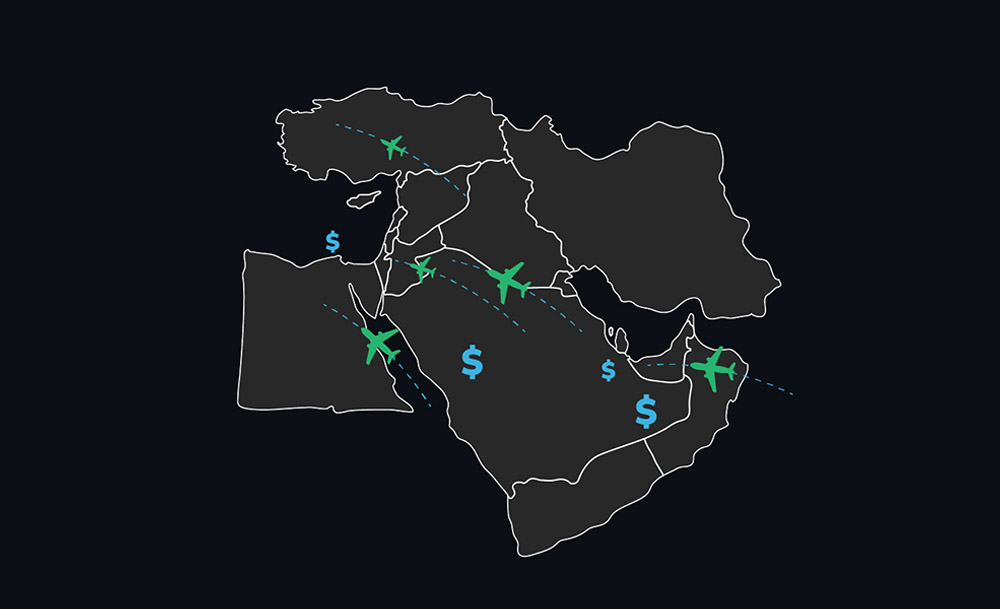
Air navigation fees (often called en-route or terminal navigation charges) are payments made by aircraft operators for using a country’s airspace and aviation infrastructure.
At a simple level, they are the price of safely moving through sovereign airspace.
These charges apply whether an aircraft is landing, departing, or simply overflying a country without touching the ground.
What they pay for
Air navigation fees fund the systems that make modern aviation possible:
- Air traffic control (ATC) and flight information services
- Communications, navigation, and surveillance (CNS) infrastructure
- Meteorological services and safety monitoring
- Search and rescue readiness and coordination
In most countries, these services are provided by a Civil Aviation Authority (CAA) or a dedicated Air Navigation Service Provider (ANSP), and fees are designed to recover the cost of operating them.
How fees are calculated
While methodologies vary, most countries follow a common structure based on:
- Distance flown within the airspace
- Aircraft weight (typically maximum take-off weight)
A simplified model looks like:
Fee ≈ Rate × Weight × Distance
This means larger aircraft and longer routes generate higher charges.
Some states apply flat fees, regional multipliers, or differentiated rates depending on airspace complexity or congestion.
How this relates to overflight
Even if an aircraft never lands, it still uses:
- Radar coverage
- Air traffic separation
- Communication systems
For that reason, overflight (transit) traffic is charged.
This is grounded in international aviation law: while aircraft have the right to transit airspace, states are allowed to charge for the services that enable that transit.
In practice, a single long-haul flight may pay navigation fees to multiple countries along its route.
Navigation fees vs airport fees
These are often confused but fundamentally different:
- Navigation fees → paid for using airspace and ATC services
- Airport fees → paid for using physical airport infrastructure (landing, parking, handling)
You can incur navigation fees without ever landing.
Why governments care
Air navigation fees are one of the few ways countries can monetize sovereign airspace at scale.
When managed well, they:
- Fund aviation safety and infrastructure
- Provide predictable, recurring revenue
- Scale with traffic growth (especially overflight corridors)
Some regions have built highly efficient centralized systems to ensure near-complete billing and collection.
The hidden problem: collection
In reality, many countries fail to capture the majority of what they are owed.
Fragmented systems, poor flight tracking, manual invoicing, and weak enforcement mean that:
In some markets, less than 60% of navigation fees are actually billed and collected.
Leakage happens at every stage:
- Flights not detected or misclassified
- Incorrect routing or aircraft data
- Missed invoices or disputes
- Weak follow-up and enforcement
The result is a significant loss of sovereign revenue, especially in high-traffic overflight regions.
Why this matters now
Global air traffic continues to grow, and with it, the value of airspace.
For many states, especially those located along major corridors, navigation fees represent a strategic revenue stream that is still under-optimized.
Improving detection, billing, and collection is not just an operational upgrade: it is a sovereign capability.
How Davinci Aero Systems can help
Davinci Aero Systems specializes in navigation fee systems that detect more, bill accurately, and collect reliably. Talk to our team to find out what your airspace is actually worth.